If you've ever asked what is customer experience? and struggled to find a clear, practical answer, you're not alone. The term gets used constantly in business and marketing circles, yet it's often misunderstood, conflated with customer service, or reduced to a single metric. This blog cuts through the noise, defining customer experience, breaking down its key components, and explaining how your website plays a central role in delivering it well.
Key Takeaways
- Customer experience (CX) is the cumulative impression a customer forms across every interaction with your organisation, covering every channel and the full customer lifecycle.
- CX spans the entire customer lifecycle, from brand awareness through to post-purchase support.
- Consistency, convenience, empathy, and low effort are the four primary drivers of a positive customer experience.
- Organisations that invest in CX see measurable improvements in loyalty, retention, and revenue.
- Your website is one of the most significant and controllable touchpoints in the customer experience.
What is Customer Experience? A Quick Definition
Customer experience (CX) is the overall perception a customer develops about your organisation based on every interaction they have with it, across every channel, at every stage of their journey, and over the entire duration of their relationship with your brand.
That definition matters because it's broader than most people expect. Customer experience encompasses a single conversation, a product review, a support ticket, and every touchpoint in between. It's the sum of all of those things, accumulated over time, shaped by everything from your website's load speed to the tone of your automated emails.
In analytical terms, CX is an output: the result of deliberate (and sometimes inadvertent) decisions made across your organisation about how customers are treated, communicated with, and served.

Key Aspects of Customer Experience
Cumulative Perception
Understanding what customer experience really is requires accepting that it's never the result of one moment. CX is the aggregate sentiment that builds, positively or negatively, across every touchpoint a customer has with your company. A single poor interaction rarely destroys a relationship outright, but a pattern of friction, inconsistency, or indifference absolutely will. This is why CX strategy requires a whole-of-organisation mindset rather than a departmental fix.
The Full Customer Journey
Customer experience covers the entire lifecycle of a customer's relationship with your brand, beginning long before a purchase is made and continuing long after. It starts the moment someone becomes aware of your organisation through a search result, a referral, or an advertisement, and continues through research, evaluation, purchasing, onboarding, and ongoing support. Each stage represents an opportunity to build trust or erode it. Effective CX strategy maps this journey deliberately and designs each touchpoint with the customer's needs in mind.
Key Drivers of a Positive Customer Experience
Four factors consistently emerge from CX research as the primary drivers of a superior experience:
- Consistency: Customers expect the same quality of experience regardless of which channel or team they're engaging with.
- Convenience: The less effort required to complete a task, the more positive the experience. Friction is the enemy of loyalty.
- Empathy: Customers want to feel understood, especially when something goes wrong. Empathy in communication and problem resolution is a significant differentiator.
- Expectation management: Consistently meeting, and occasionally exceeding, customer expectations is the foundation of a strong CX.
Business Impact
The commercial case for prioritising customer experience is compelling. Organisations with strong CX programmes outperform their competitors on customer retention, advocacy, and revenue growth. Customers who report excellent experiences are far more likely to return, spend more, and recommend your organisation to others. Research shows that many customers are willing to pay a premium for a low-effort, high-quality experience, making CX investment a direct driver of margin as well as satisfaction.
CX vs. Customer Service: A Critical Distinction
Customer service is a reactive function: a team or department that responds when a customer has a problem or question. Customer experience is a proactive strategy. It encompasses every interaction across every channel, including many that happen without any human involvement at all, such as your website, your emails, and your app. Customer service is one component within the broader CX ecosystem. Organisations that confuse the two often underinvest in the digital and environmental factors that shape the majority of customer perception.
Components of a Positive Customer Experience
Personalisation
Customers increasingly expect interactions that feel relevant to them individually(external link). Personalisation uses behavioural and demographic data to tailor content, recommendations, and communications, and is one of the most effective ways to improve customer experience at scale. On a website, this might mean dynamic content that adapts to a returning visitor, or product recommendations based on previous browsing behaviour.
Consistency Across All Channels
A customer might discover your organisation through a social media post, research you via your website, and then phone your team to complete a purchase. If each of those experiences feels disconnected, with a different tone, different information, or different quality, the customer experience suffers. Building a consistent brand experience across all channels is foundational to strong CX, and it requires deliberate alignment between your digital and human touchpoints.
Empathy in Design and Communication
Empathy in CX is the practice of anticipating and responding to customer needs with genuine care. On a website, empathetic design means clear error messaging that guides rather than frustrates, accessible content that works for users of all abilities, and copy that addresses real concerns rather than simply promoting products. Empathy is a design principle with measurable impact on customer satisfaction and conversion.
Low-Effort Experiences
The Customer Effort Score (CES)(external link) is one of the strongest predictors of customer loyalty. The principle is straightforward: the less effort a customer has to expend to find information, make a purchase, or resolve a problem, the more positively they'll perceive the experience. For digital channels, this translates to fast load times, intuitive navigation, mobile responsiveness, and clear calls to action, all of which are well within the scope of a considered web design programme.
How Websites Fit into Customer Experience
Your Website as a Digital Storefront
For most organisations, the website is the single most visited and most controllable touchpoint in the customer journey. It's where first impressions are formed, where purchasing decisions are researched, and where trust is either established or lost. A website that is slow, confusing, inaccessible, or visually inconsistent with your brand sends a clear signal to customers, regardless of whether that's the signal you intend to send.
Treating your website as a strategic CX asset rather than a static brochure is one of the highest-leverage investments an organisation can make in its customer experience programme.
CX vs UX vs UI: Understanding the Difference
These three acronyms are frequently conflated, but they describe distinct disciplines:
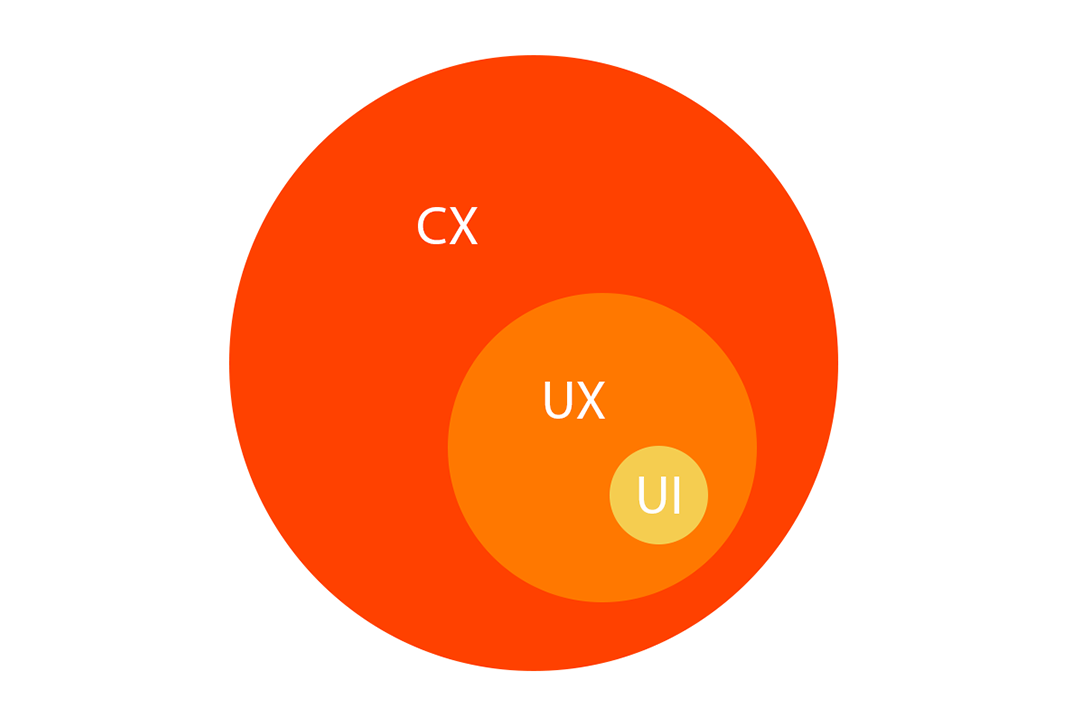
- Customer Experience (CX) is the broadest lens: the sum of all interactions a customer has with your organisation, across every channel and over the full lifecycle of the relationship.
- User Experience (UX) focuses specifically on how a person interacts with a product or system, most commonly a website or application. It includes usability, accessibility, information architecture, and task completion.
- User Interface (UI) is the visual and interactive layer: the buttons, typography, layout, and colour system that users see and engage with.
The relationship between the three is sequential. Good UI supports good UX, and good UX contributes to a positive CX. CX extends well beyond the screen, encompassing human interactions, operational processes, and brand communications that no single design decision can fully account for.
Somar Digital Case Studies
At Somar, we work with organisations across a range of sectors to improve customer experience through considered, user-centred design.
Metlink: Public Transport Information Tools
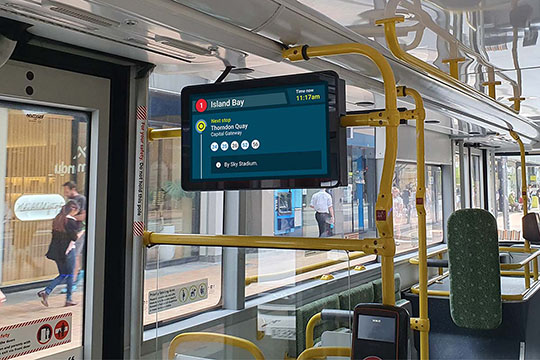
Somar has partnered with Metlink for over a decade to design and build digital tools that help Wellington commuters access reliable, timely public transport information. From real-time service alerts and on-bus announcements to printable timetables and a Total Cost of Journey Calculator, each tool was built around genuine user needs.
The results are tangible: Metlink can now generate communications assets in approximately a tenth of the time previously required, while commuters benefit from consistent, accessible information across every touchpoint in their journey.
Kura Kete: Learning Resources for Educators
Greater Wellington Regional Council (GWRC) partnered with Somar to build Kura Kete, an interactive online resource hub designed to help teachers integrate transport education into their classrooms. Drawing on direct consultation with educators across the Wellington region, we developed a fully responsive, accessible platform with advanced search and filtering capabilities, allowing teachers to find curriculum-aligned resources quickly and with minimal effort.
The result is a calm, intuitive experience that reduces time spent searching and increases time spent teaching. These results reflect a consistent principle: when organisations invest in understanding their customers' needs and designing digital experiences around those needs, the business impact follows.
Ready to Improve Your Customer Experience?
Now that you have a clear answer to what is customer experience?, the next step is assessing where your organisation's CX currently stands, particularly across your digital touchpoints.
At Somar, we partner with organisations to build websites and digital experiences that are user-centred, accessible, and designed to deliver measurable results. If your website could be working harder for your customers, we'd love to talk.
Get in touch with the Somar team to start the conversation.