
In this blog we outline the key advantages of agile project management, including enhanced flexibility, improved quality, and increased customer satisfaction.
Key takeaways
- Agile is an iterative approach to project management, breaking work into smaller sprints rather than following a fixed, linear plan.
- It differs from the traditional waterfall model by prioritising adaptability over rigid structure.
- Agile encompasses several frameworks, including Scrum, Kanban, and Lean, all built on the values set out in the Agile Manifesto.
- Working software is delivered at every stage, giving clients tangible progress throughout the project rather than only at the end.
- Agile's flexibility, collaboration, and continuous feedback lead to faster delivery, higher quality, and stronger client relationships.
- Breaking projects into manageable increments also supports better risk management and more efficient use of resources.
- Somar Digital applies an agile approach across all our projects, as demonstrated in our work with Greater Wellington Regional Council and Health New Zealand Te Whatu Ora.
The many advantages of taking an agile approach to project management has established it as a preferred choice for teams seeking efficiency and adaptability. It is especially beneficial for teams that are looking for a project management methodology that has a capacity for rapid adaptation and high-quality software delivery.
Agile development methodologies provide a robust framework and practical techniques that support these needs, emphasising continuous enhancement, adaptability, and a strong focus on customer satisfaction.
Agile Project Management
What is Agile?
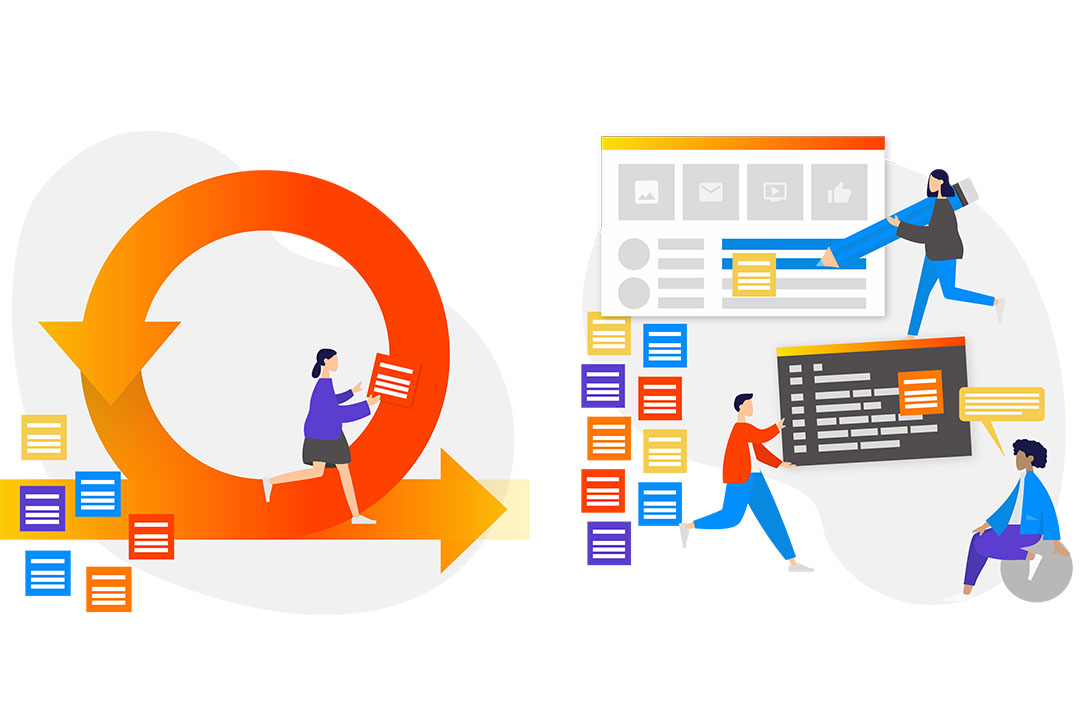
Agile is a methodology that supports continuous iteration in development and testing throughout the project lifecycle. This approach contrasts with the traditional waterfall model, which is more linear and structured, often leading to rigid project flows and less adaptability to change. Instead, agile breaks the project into smaller, manageable units known as sprints, enabling a more flexible and adaptive approach.
Overview of Agile Methodology
Agile can encompass a range of methodologies that adhere to a shared set of values and practices. These methodologies include well-known frameworks like Scrum, Kanban, and Lean, each supporting the core principles outlined in the Agile Manifesto. This manifesto prioritises individual and team interactions, operational software, customer collaboration, and the flexibility to adapt to change over rigid planning and documentation.
Agile Software Development
This approach allows teams to tackle unpredictability through short work phases and frequent reassessment. Key to agile's methodology is delivering functional and usable software at each stage of development, culminating in a product that is refined and ready for market at the conclusion of each iteration.
Advantages of Agile Project Management
Flexibility and Adaptability
One of the primary advantages of Agile development methodology is its ability to adapt to changes quickly. Projects rarely stay static, and new information or evolving market needs can lead to shifts in priorities. Agile enables teams to respond to these changes without derailing the entire project.
By breaking down development into sprints, Agile allows for continuous reassessment of priorities, ensuring that the most important features are developed first. This flexibility makes Agile particularly useful for fast-paced industries, where customer demands and market conditions can change rapidly.
Improved Collaboration and Communication
Agile encourages regular communication between team members and the client, ensuring that everyone is aligned on the project’s goals and progress. Daily stand-up meetings, for instance, allow team members to update each other on their work, discuss any challenges, and plan for the day ahead.
This focus on collaboration fosters a sense of shared ownership, leading to a more cohesive team. Agile also promotes transparency, as the client is involved throughout the development process, allowing for adjustments based on real-time feedback.
The Agile framework also encourages accountability, as team members are responsible for completing specific tasks within each sprint. This clear delineation of responsibilities ensures that everyone is accountable for their part of the project.
Faster Time-to-Market
An advantage of Agile Project Management is its ability to deliver working software more quickly. Instead of waiting for the entire project to be completed, Agile delivers features incrementally, providing value to users much sooner.
By focusing on completing specific tasks within each sprint, Agile ensures that a working version of the product is available at the end of every cycle. This faster time-to-market is particularly advantageous for businesses that need to stay ahead of their competition.
Continuous Feedback and Improvement
Agile development methodology thrives on continuous feedback. Throughout the project lifecycle, clients and stakeholders are given the opportunity to review and provide input on the work being produced. This regular feedback loop ensures that the final product aligns with user needs and expectations.
Moreover, this iterative process allows teams to make improvements as they go along. Issues can be identified early and resolved quickly, reducing the risk of major problems at the end of the project.
Enhanced Product Quality
Agile’s emphasis on continuous testing and review helps ensure that product quality remains high. By testing at every stage of the development process, teams can catch and fix issues before they become larger problems.
This focus on quality assurance allows teams to deliver a polished and reliable product, reducing the need for extensive rework after the project is completed.
Increased Customer Satisfaction
Because of the incremental nature of Agile project management clients can get user feedback earlier than other project management methodologies. Regular updates and progress reports mean that clients can see tangible results, providing them with confidence that the project is on track.
Agile also gives clients the opportunity to make adjustments based on real-time feedback, ensuring that the final product meets their expectations. This collaborative approach strengthens client relationships and leads to higher customer satisfaction.
Better Risk Management
Agile development helps manage risks more effectively by breaking the project down into smaller, manageable tasks. Continuous delivery ensures that progress is being made, reducing the chances of project failure.
Additionally, Agile’s iterative nature allows teams to identify potential risks early in the process, allowing for timely intervention and problem-solving.
Efficient Use of Resources
Agile maximises resource efficiency by focusing on high-priority tasks. Each sprint is dedicated to completing specific features or improvements, ensuring that resources are being used optimally.
By dividing work into smaller increments, Agile reduces the risk of wasted effort on unnecessary or low-priority tasks. This leads to greater productivity and better overall resource management.
Case Studies: Examples of Agile Project Management in Action
At Somar Digital we undertake all of our projects with an agile approach. These are a couple of examples of work we have delivered for our clients using agile project management.
Kura Kete case study
Greater Wellington Regional Council wanted to revitalise its School Travel Programme.
Somar Digital partnered with the council to build Kura Kete, an interactive online toolkit that gives teachers accessible, curated resources for bringing transport learning into the classroom.
The site needed to be user-friendly, visually engaging, and highly functional, making it easy for teachers to find resources and encouraging active transport education in schools.
An Agile approach shaped every stage of the project:
- UX discovery and definition: user requirements were defined before development began, so the site was built around real teacher needs from day one.
- Design and development in sprints: two-week development cycles let the team prioritise the features with the biggest impact for users.
- Integrated project management: weekly reporting kept progress, risks, and deliverables transparent throughout the project.
- SEO integration: technical SEO was built in from the start, making the site easy for search engines to crawl and find.
Health Promotion/Health NZ Te Whatu Ora – depression.org.nz
Somar Digital was engaged by Health Promotion, Health New Zealand Te Whatu Ora, to redesign and rebuild depression.org.nz. The site provides mental health information that is easy to understand, practical, and trustworthy, reflecting the social and cultural context of Aotearoa New Zealand. The project focused on improving user experience and interface design, ensuring mobile responsiveness, and creating a vibrant, accessible web application.
The project brought together several stakeholders, each with different expertise. Somar Digital worked alongside Health Promotion, along with cultural and content consultants Tātou NZ Ltd and Dioscuri Limited. Agile ceremonies, shared documentation, and clear communication channels helped the wider team work as one cohesive unit, despite spanning multiple organisations.
This collaborative approach, supported by strong client management, meant the team could adapt quickly to challenges and keep the project moving smoothly, with everyone working towards the same goal.
Conclusion
By adopting agile practices, companies can enhance their development processes and more effectively meet their customers' needs. Agile's ability to evolve with the shifting demands of the tech industry continually refines both the process and the products it produces, ensuring that businesses can keep pace with changes and capitalise on new opportunities as they arise.
If you’d like to chat about an upcoming project or learn more about Agile Project Management you can contact our team below.