ChatGPT Ads are now available in New Zealand, giving local marketers a new way to reach people while they are exploring, comparing and making decisions inside ChatGPT.
For New Zealand businesses, this is an early opportunity to understand how advertising may work in a conversational environment. Rather than relying only on traditional search terms or social targeting, ChatGPT Ads are designed to appear when they are relevant to the context and intent of a user’s conversation.
Key Takeaways
- ChatGPT Ads are currently a beta advertising product managed through OpenAI Ads Manager Beta.
- ChatGPT Ads may appear to users on Free and Go plans, while Plus, Pro, Business, Enterprise and Edu accounts are not expected to see ads.
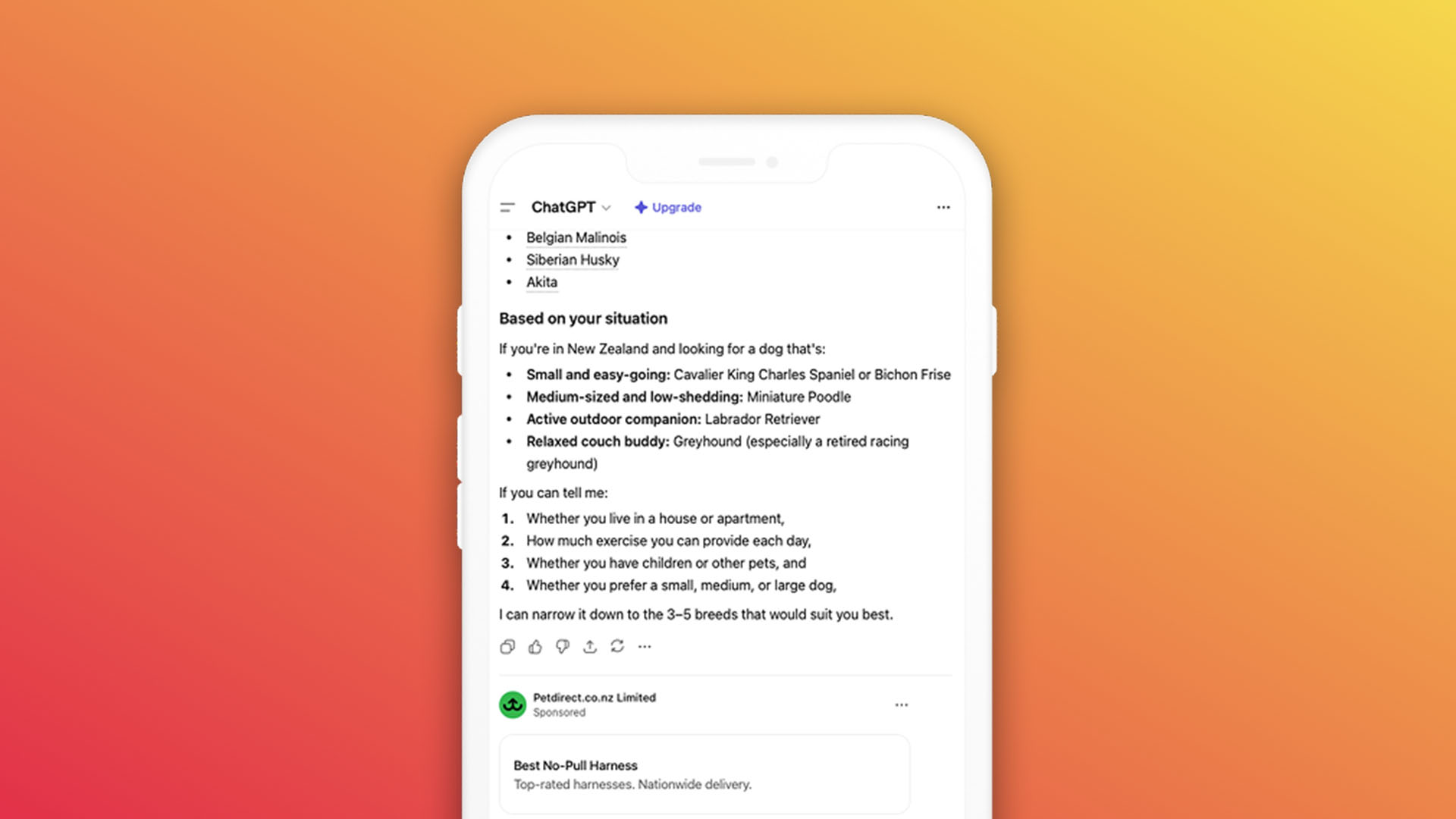
- ChatGPT Ads are shown below relevant ChatGPT conversations and are clearly labelled as sponsored.
- ChatGPT Ads use conversational context and intent signals, not simple exact-match keyword targeting.
- ChatGPT Ads support CPC and CPM buying models, with reporting for impressions, clicks, spend, CTR, average CPC, average CPM and conversions.
- ChatGPT Ads require advertisers to complete account setup, verification, billing and campaign review before campaigns can serve.
ChatGPT Ads Overview
ChatGPT Ads are now available in New Zealand and are managed through OpenAI Ads Manager Beta. For marketers, they offer a new way to reach people inside ChatGPT while they are researching, comparing options or making decisions.
Unlike traditional keyword-based advertising, ChatGPT Ads are shaped by conversational context and user intent. This means ads can be matched to the broader topic or need being discussed, rather than just a single search term.
For New Zealand businesses, ChatGPT Ads are worth watching closely. The platform is still in beta, but it already gives advertisers a way to create campaigns, manage budgets, monitor performance and test how conversational advertising could fit into their wider digital strategy.
What are ChatGPT Ads?
OpenAI describes ChatGPT Ads as a way for advertisers to reach users as they explore, compare and decide in a conversational experience(external link). That makes ChatGPT Ads particularly interesting for brands with strong educational, comparison, product discovery or decision-support journeys.
Who sees ads and what do the ads look like?
ChatGPT Ads may be shown to users on Free and Go plans. They are not shown to users on Plus, Pro, Business, Enterprise or Edu plans. OpenAI also states that ads are not shown to users who say they are, or are predicted to be, under 18.
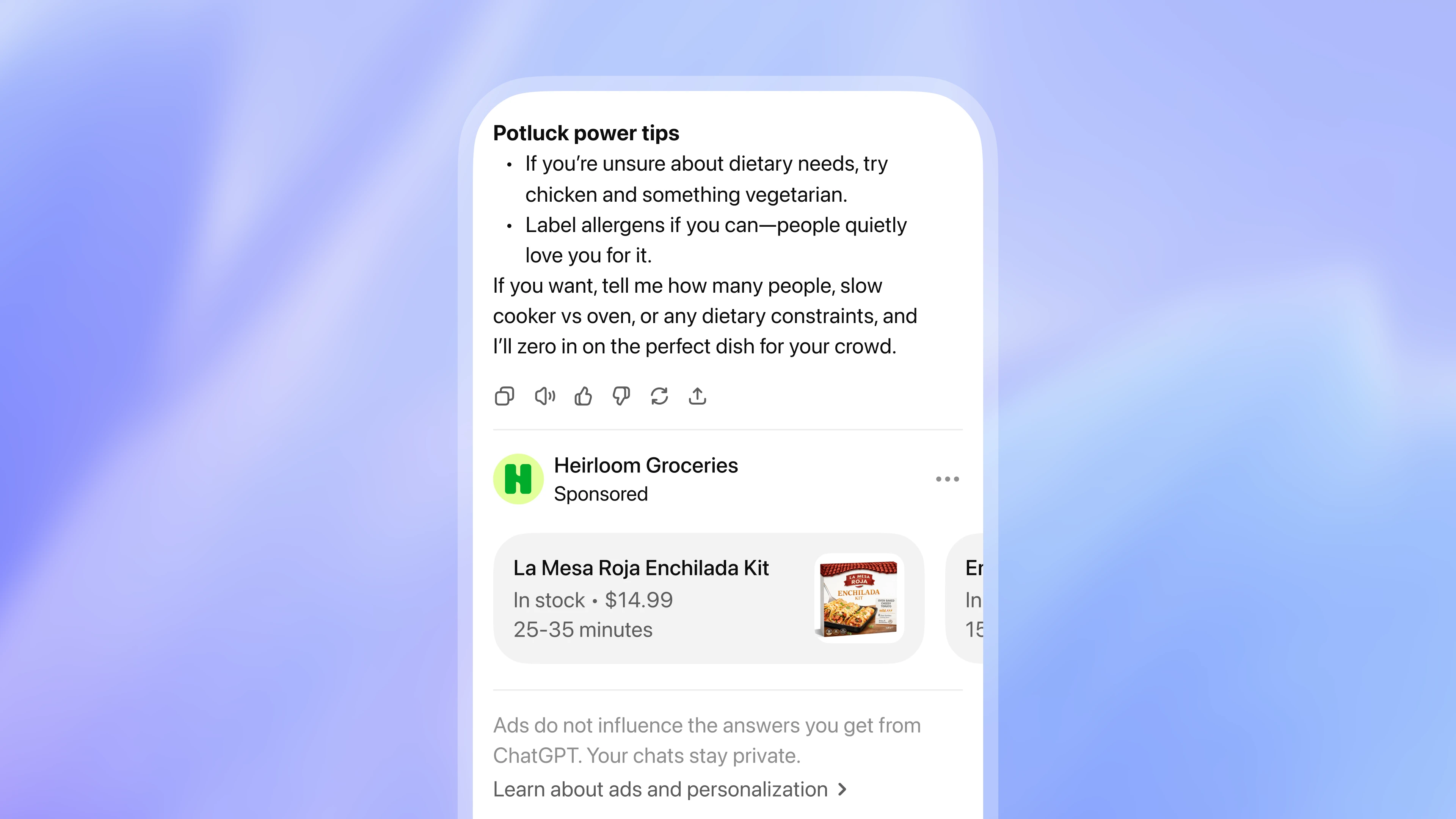
ChatGPT Ads appear below relevant ChatGPT conversations. A typical ChatGPT Ads unit includes:
| ChatGPT Ads element | What it means |
| Advertiser name | The brand or business behind the ad |
| Favicon or logo | A small advertiser identity asset |
| Title | The ad headline |
| Copy | The ad description |
| Landing page | The destination URL |
| Image asset | The creative image shown with the ad |
The key point is clarity. ChatGPT Ads should not be confused with ChatGPT’s answer. They are labelled as sponsored and placed separately.
How are Ads served to ChatGPT users?
ChatGPT Ads are served based mainly on relevance to the context and intent of the conversation. OpenAI says ad selection can consider inputs such as context hints, landing page, ad title and ad copy.
This is where ChatGPT Ads differ from traditional keyword advertising. Advertisers can provide context hints at the ad group level, but these are not exact-match keywords. They are broader signals that describe the kinds of conversations, topics or user needs where the ad may be relevant.
A practical way to think about it:
Conversation intent → context hints → relevant ad group → suitable ad creative → landing page click
For marketers, this means ChatGPT Ads require sharper strategic thinking. You need to understand the user’s problem, the language they may use, and the moment where your product or service becomes genuinely useful.
How does pricing work?
ChatGPT Ads support two main buying options: CPC and CPM.
| Pricing model | Best suited to | How it works |
| CPC | Traffic and engagement | Advertisers pay for clicks |
| CPM | Reach and visibility | Advertisers pay per thousand impressions |
OpenAI recommends a starting maximum CPC bid of $3–$5 USD per click. For CPM campaigns, OpenAI lists a default maximum bid of $60 CPM. ChatGPT Ads use a relevance-weighted, second-price auction, which means the system considers both advertiser value and user relevance when selecting ads.
The current minimum daily spend is $25 per campaign. That makes ChatGPT Ads accessible enough for testing, but still structured enough to encourage meaningful campaign planning.
How are ChatGPT Ads tracked and measured?
Measurement for ChatGPT Ads currently includes the core performance metrics marketers expect:
| Metric | What it tells you |
| Impressions | How often ChatGPT Ads were shown |
| Clicks | How often users clicked |
| Spend | How much budget was used |
| CTR | The click-through rate |
| Avg. CPC | Average cost per click |
| Avg. CPM | Average cost per thousand impressions |
| Conversions | Conversion activity, if measurement is set up |
Advertisers can also use UTM parameters on landing page URLs to track ChatGPT Ads traffic in their existing analytics tools. This is important because it lets marketers compare ChatGPT Ads against search, paid social, display and other acquisition channels.
How to Get Started
The best way to approach ChatGPT Ads is as a structured test, not a rushed media buy. Start with one clear commercial goal. Choose the products, services or offers that are easiest to explain and most likely to match high-intent conversations.
Before launching ChatGPT Ads, prepare:
| Preparation area | Why it matters |
| Campaign objective | Determines buying model and optimisation |
| Audience intent | Shapes context hints and ad groups |
| Creative variations | Helps test messaging angles |
| Landing pages | Supports conversion and quality |
| Tracking | Enables performance analysis |
| Budget | Controls testing scale |
ChatGPT Ads reward clarity. The stronger the link between user intent, ad message and landing page, the better your campaign foundation.
Setting up an Ads Manager Account
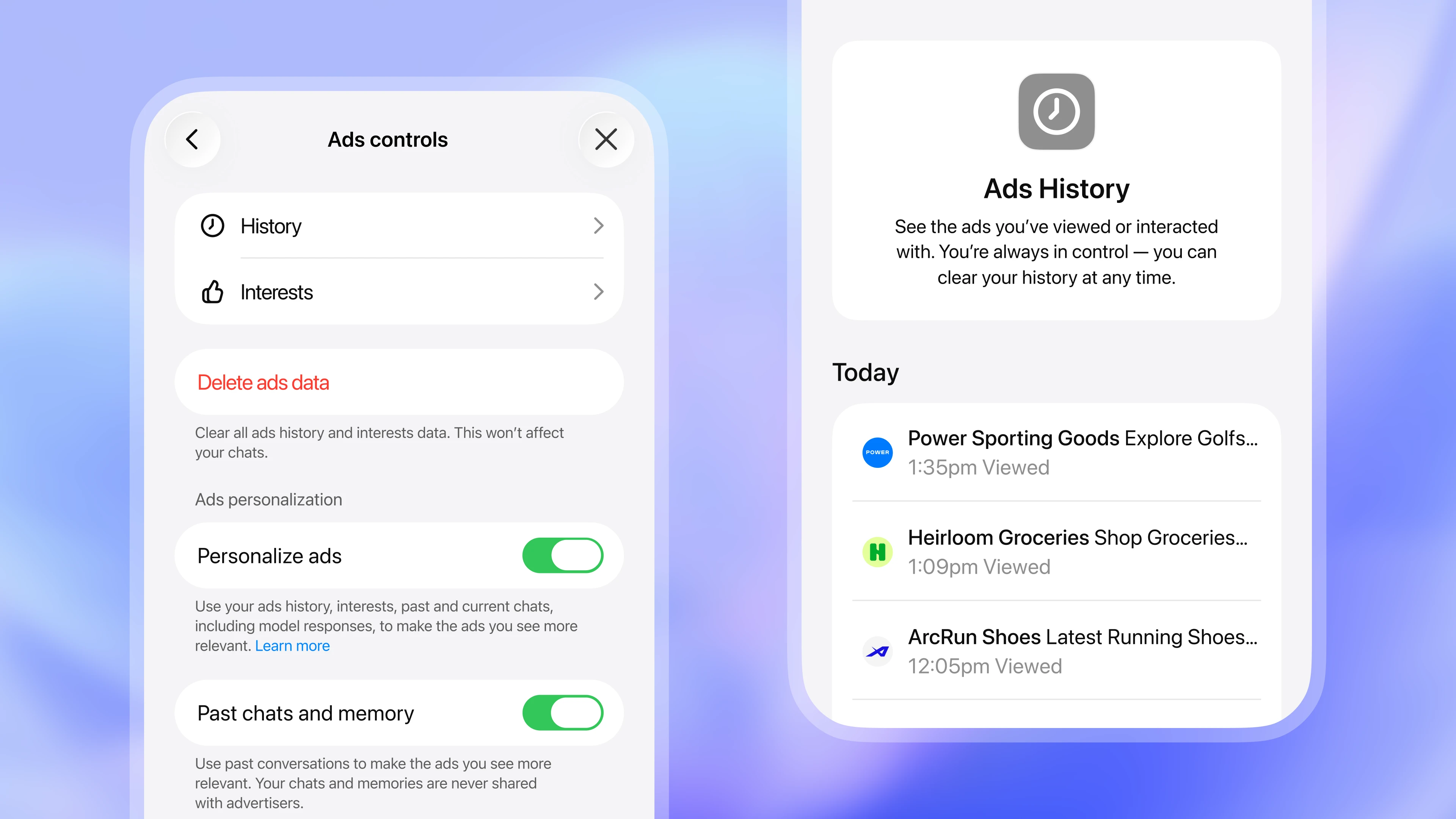
To run ChatGPT Ads, advertisers need an OpenAI Ads Manager Beta account. Account setup includes onboarding, verification, account information, billing and team access(external link).
- Access Ads Manager Beta and create your account: Advertisers access Ads Manager Beta and sign in with an OpenAI account. Ideally, this should be a work email associated with the business. Each business should have one account owner create the advertiser account first.
- Complete account onboarding and verification: During onboarding, advertisers enter business details such as business name, website, logo and industry. OpenAI may also require verification through Persona. Campaigns will not deliver until required verification steps are complete.
- Complete account information: Once access is granted, advertisers should complete account information carefully. The account name and logo are especially important because they appear in the ChatGPT Ads unit. This is not a small detail. Brand presentation affects trust.
- Set up billing and payment: Billing must be complete before ChatGPT Ads can deliver. Advertisers need to create a billing profile and add a payment method. Any billing issue can stop campaigns from serving, so this should be checked before launch.
- Invite team members: After the account is set up, account owners can invite other team members. For agencies or larger marketing teams, this is useful for separating strategy, creative, media buying and reporting responsibilities.
ChatGPT Ad Campaign Setup
ChatGPT Ads campaigns follow a simple structure: campaign, ad group and ad(external link).
Campaign → Ad Group → Ad → Landing Page → Conversion
Create campaign
The campaign defines the objective, budget, dates and country targeting. ChatGPT Ads currently support objectives such as views for CPM buying and clicks for CPC buying.
A strong campaign should map to one business goal. Avoid mixing different objectives, regions or product categories into one campaign unless there is a clear reason.
Set Ad Group(s)
Ad groups organise ChatGPT Ads around themes, products, use cases or intent areas. This is where context hints become important.
Good context hints describe the types of conversations where your offer is relevant. They should be broad enough to capture natural language variation, but specific enough to avoid vague matching. For example, “people comparing project management tools for small teams” is stronger than “software”.
Create Ads and launch ads
Each ChatGPT Ads creative includes a title, description, image and landing page. OpenAI recommends clear, specific and benefit-focused messaging:
- For titles, state the value quickly.
- For descriptions, add useful detail rather than repeating the headline.
- For images, keep the creative simple, relevant and aligned with the ad message.
- For landing pages, send users to the most relevant page, not a generic homepage.
Once ready, campaigns are submitted for review. After approval, advertisers should check whether campaigns are serving and resolve any “Not serving” issues.
Metrics to monitor
The main ChatGPT Ads metrics to monitor are impressions, clicks, spend, CTR, average CPC, average CPM and conversions.
A useful early dashboard might look like this:
| Question | Metric to watch | What to do next |
| Are ChatGPT Ads showing? | Impressions | Review eligibility and delivery |
| Are users engaging? | CTR and clicks | Test titles, descriptions and context hints |
| Is spend controlled? | Spend, Avg. CPC, Avg. CPM | Adjust bids and budgets |
| Are clicks valuable? | Conversions | Improve landing page and tracking |
| Which ads work best? | CTR and conversions by ad | Scale winners and pause weak variants |
The biggest mistake is judging ChatGPT Ads on one metric alone. High CTR without conversions may signal curiosity, not quality. Low impressions may point to narrow context hints, limited relevance or campaign setup issues. Strong ChatGPT Ads analysis should connect delivery, engagement and outcomes.
Next Steps
ChatGPT Ads are still in beta, but they are already worth paying attention to. For New Zealand businesses, they offer a new way to reach people in moments of research, comparison and decision-making, with advertising shaped by conversational intent rather than traditional keywords alone.
If you’re curious about how ChatGPT Ads could fit into your wider digital marketing strategy, Somar can help. Get in touch with our team to talk through your goals, assess whether ChatGPT Ads are right for your business, and plan a practical test campaign.