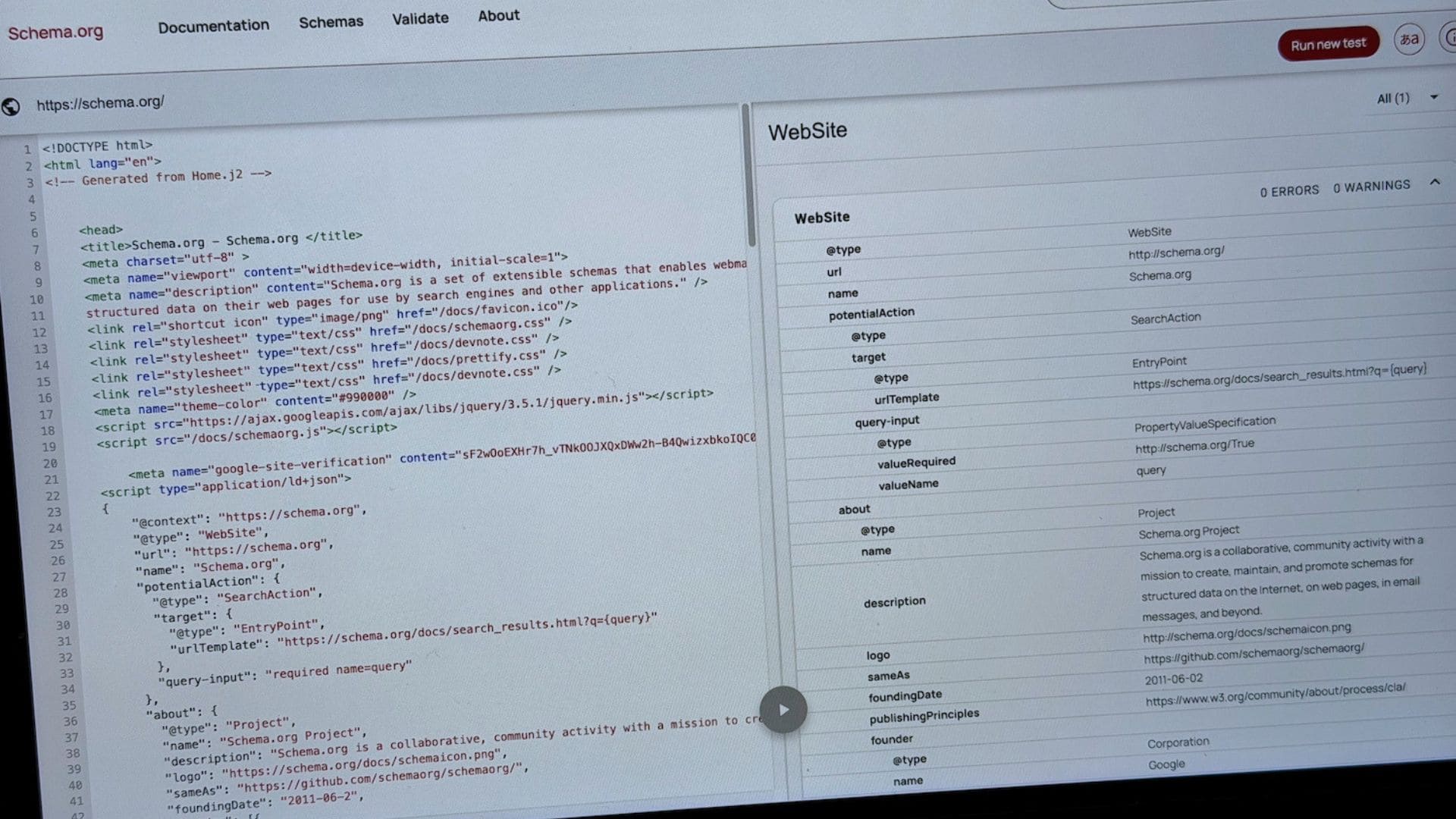
Structured data in SEO and AEO is a standardised format for presenting content to search engines and AI, helping them understand your pages and surface richer, more accurate results.
Before we dive into structured data optimisation strategies, it's important to know and understand what structured data is, how to implement it on your website, and what impact it has on your SERP results, as well as getting mentioned in LLMs and ranked in search engines.
What is Structured Data?
Structured data is predefined data that populates into rows and columns in a database. This database helps make the stored information searchable, queryable, and analysable by search engines, machines, and AI. In SEO, structured data is a standard format (like JSON-LD) provided to search engines and large language models. Structured data includes schema markup, which helps define the type of content, provide rich results, and more.
How to Implement Structured Data on Your Website?
You can add different types of structured data to your website. For example, there are organisation schema, breadcrumbs, FAQ, product, localbusiness, article, recipe, and more schema types that help search engines and LLMs understand what the web page or website is about, and the type of information it has.
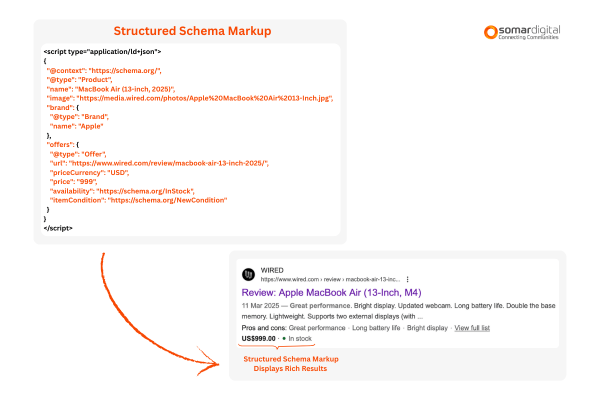
How Does Structured Data Affect Your SERP Results and AI Mentions?
With the help of structured data, you can inform different search engines and AI or LLMs about your website and its content. For example, if you have an e-commerce website, then you can implement localbusiness, as well as product schema, on your website. This will bring your product information as Rich Results in SERP results and AI mentions.
The Shift From Keyword Search to AI-Driven Search Systems
Search and how people find answers, businesses, organisations, restaurants, etc., have changed drastically in the last 2-3 years. More than 50% of users start their search outside Google, which means that users are either finding information on other search engines or they are using LLMs like ChatGPT(external link), Claude(external link), Perplexity, Gemini, etc. Keywords alone are not going to help you get mentioned or cited in AI SEO, but with the help of structured data, you can bridge the gap between your organisation and the user in LLMs and search engines.
How AI Search Systems Interpret Structured Data
Structured data, such as Schema Markup(external link), helps AI systems and crawlers understand, verify, and extract information from web pages. AI models use structured data to interpret entities, their relationships, and attributes. This helps them to answer more accurately and increase the likelihood of citations and mentions in answers.
Understanding Entities, Relationships, and Context
An entity is a unique and distinguishable "thing" such as a person, place, event, concept, organisation, etc. Entities are meaningful and don't exist by themselves; they're always related to other entities. For example, in "Dua Lipa" performed in "Auckland", where "Dua Lipa" and "Auckland" are entities and "performed in" is a predicate connecting them. Context provides additional information that helps systems understand entities and their relationships.
Choosing the Right Schema Types for Your Content
Choosing the right schema markup depends on the purpose of your content. With the help of schema markup, you can present rich snippets to users on search engines as well as on answer engines. Schema.org covers a wide range of schema markups that can be implemented on your website for different types of content. Key schema markup types include Organization for defining standardised, and detailed information about a business, Product for e-commerce, Article for blogs, LocalBusiness for physical locations, FAQ for question-and-answer content, and Event or Recipe for specialised content.
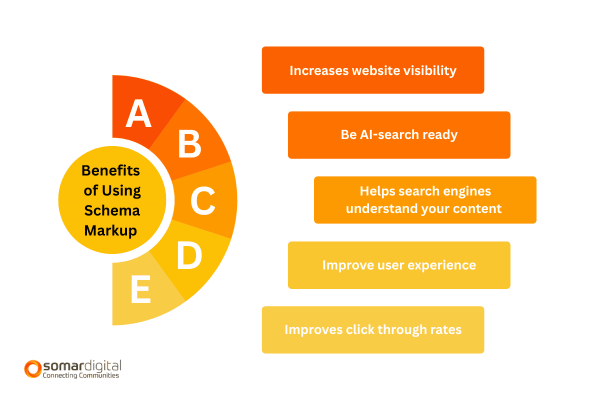
Structured data is important for AI to understand, categorise, and summarise website content, directly boosting visibility in Google AI Overviews, and ChatGPT(external link), Gemini or Claude(external link) answers. Data rich content is more likely to be mentioned in AI summaries and answers than those lacking schema. You should focus on content accuracy and keep content concise and straightforward that meets search intent.